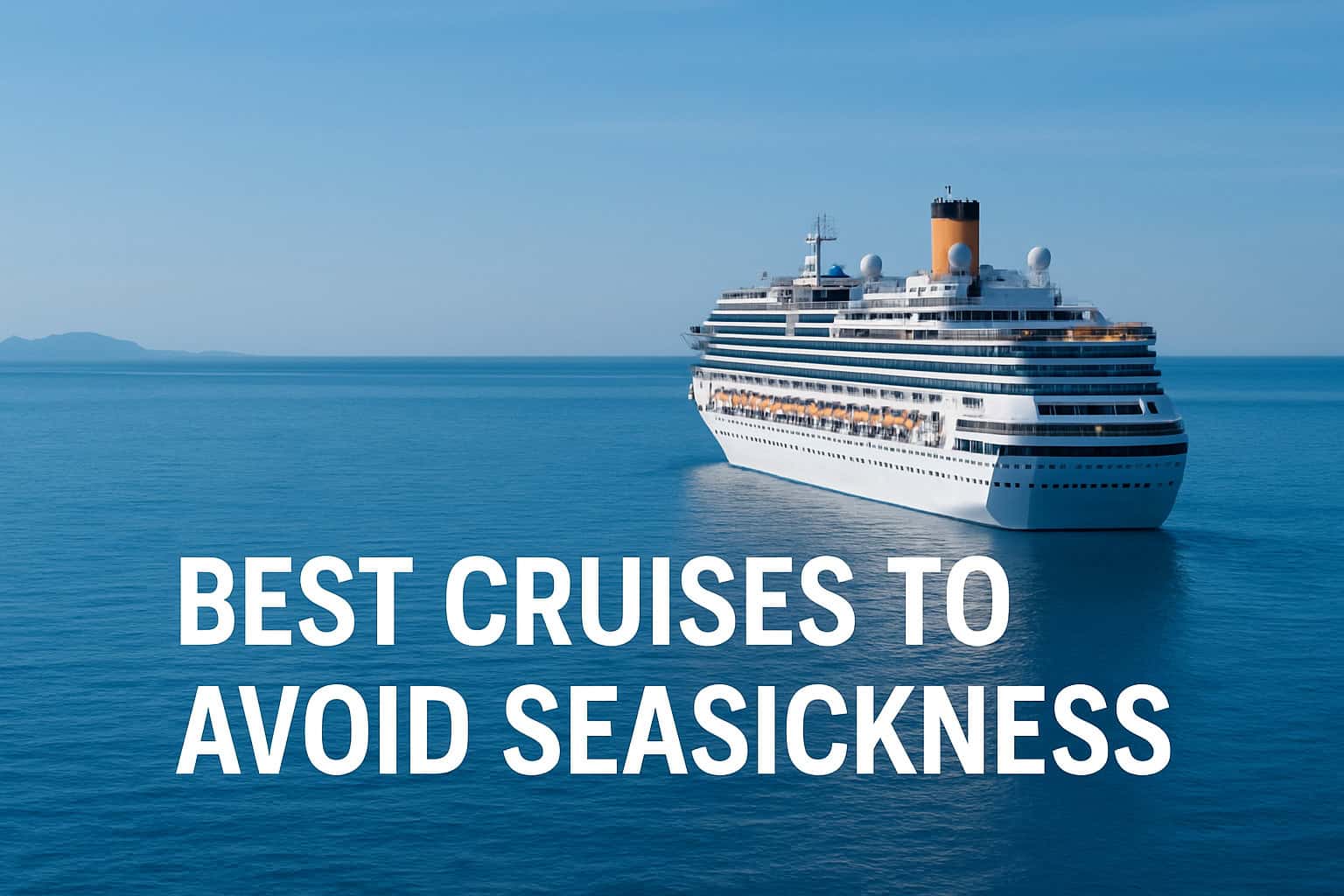
Best Cruises to Avoid Seasickness

Smooth Sailing Options for Every Traveler
If you’ve ever felt your stomach lurch when the waves start rolling, you have probably already wondered what are the best cruises to avoid seasickness. You are certainly not alone. Seasickness is one of the top worries for new cruisers—and even seasoned travelers sometimes hesitate before booking certain itineraries. The good news? Not all cruises are created equal when it comes to motion at sea.
If you want to spend your time enjoying poolside cocktails, fine dining, and island hopping without worrying about getting queasy or taking a regular dose of anti-nausea medication, this guide will help you pick the best cruises to avoid seasickness.
Why Some Cruises Feel Smoother Than Others
Seasickness is caused by your inner ear sending mixed signals to your brain when movement is detected. Some ships, routes, and seasons make that motion more noticeable than others. A few factors that impact how smooth your cruise feels:
- Ship Size & Technology – Larger, modern ships have advanced stabilizers to minimize rocking.
- Itinerary & Route – Cruises in calm seas (like the Caribbean) are usually smoother than ocean crossings.
- Time of Year – Avoid hurricane season in the Caribbean or winter storms in the Atlantic. Review our Best Time To Cruise Calendar post.
- Cabin Location – Mid-ship, lower decks are the most stable spots onboard and the least likely to cause seasickness.
The Best Cruises for Calm Seas
While there is no way to predict rough seas, especially when booking a cruise months in advance, though there is historical and somewhat predictable data that can help.
1. Caribbean Cruises
The Caribbean is known for warm weather, turquoise waters, and calm seas. Shorter itineraries from Florida or Puerto Rico typically stick to protected waters, making them ideal for first-timers worried about motion.
Best Picks:
- Eastern Caribbean itineraries (St. Thomas, St. Maarten, San Juan)
- 3–7 day roundtrips from Miami, Fort Lauderdale, or Orlando
2. Alaska Inside Passage Cruises
The Inside Passage route is naturally sheltered by islands and coastal mountains, making the waters much calmer than open-ocean crossings. Plus, the breathtaking scenery—glaciers, fjords, and wildlife—will keep your mind off any small sways.
Best Picks:
- Roundtrip from Seattle or Vancouver
- Itineraries stopping in Juneau, Ketchikan, and Skagway
3. Mediterranean Cruises (Summer Months)
The Mediterranean Sea is generally calm during late spring through early fall. You’ll explore historic ports like Rome, Barcelona, and Athens with minimal motion. Just avoid the shoulder seasons when storms can stir things up. Read more about Rome as a port city, and learn about “shoulder” season.
Best Picks:
- Western Mediterranean: Spain, France, Italy
- Eastern Mediterranean: Greece, Croatia, Turkey
4. River Cruises
Here’s a little secret—river cruises are practically seasickness-proof. Since you’re sailing on calm rivers instead of open oceans, you’ll barely notice the movement of the ship.
Best Picks:
- Danube River (Germany to Hungary)
- Rhine River (Amsterdam to Basel)
- U.S. options on the Mississippi River
5. Bermuda Cruises (Summer)
Sailing from the East Coast to Bermuda is usually smooth during summer months, thanks to calmer Atlantic conditions. The island itself is a gem—pink sand beaches and British charm. Since cruises to Bermuda earlier or later in the year can provide some very rough seas, most cruise lines only have Bermuda sailings in April – July.
Cruises to Think Twice About if You’re Prone to Seasickness
- Transatlantic Crossings – The open Atlantic can be rough, especially in winter. Transatlantic cruises will sail in either April/May or October/November. Read more about Transatlantic Cruising.
- Around Cape Horn (South America) – This area is infamous for choppy waters.
- Alaska Gulf Crossings – While Alaska’s Inside Passage typically provides calm seas, Alaska’s Gulf routes can get quite choppy.
Extra Tips to Prevent Seasickness
Here are some extra tips to consider when wanting to avoid seasickness:
- Book a midship, lower-deck cabin for maximum stability.
- Bring motion sickness remedies (wristbands, ginger, Dramamine, or prescription patches).
- Get fresh air and keep your eyes on the horizon when you feel queasy.
- Stay hydrated with water and avoid heavy alcohol on rocky days.
Closing Thoughts
Don’t let seasickness fears keep you from enjoying an amazing cruise vacation. By choosing the right itinerary—like the Caribbean, Inside Passage to Alaska, or even a river cruise—you’ll maximize your chances of smooth sailing. So go ahead, grab that drink with the little umbrella, stretch out on your balcony, and enjoy your trip without worrying about the waves.







One Comment