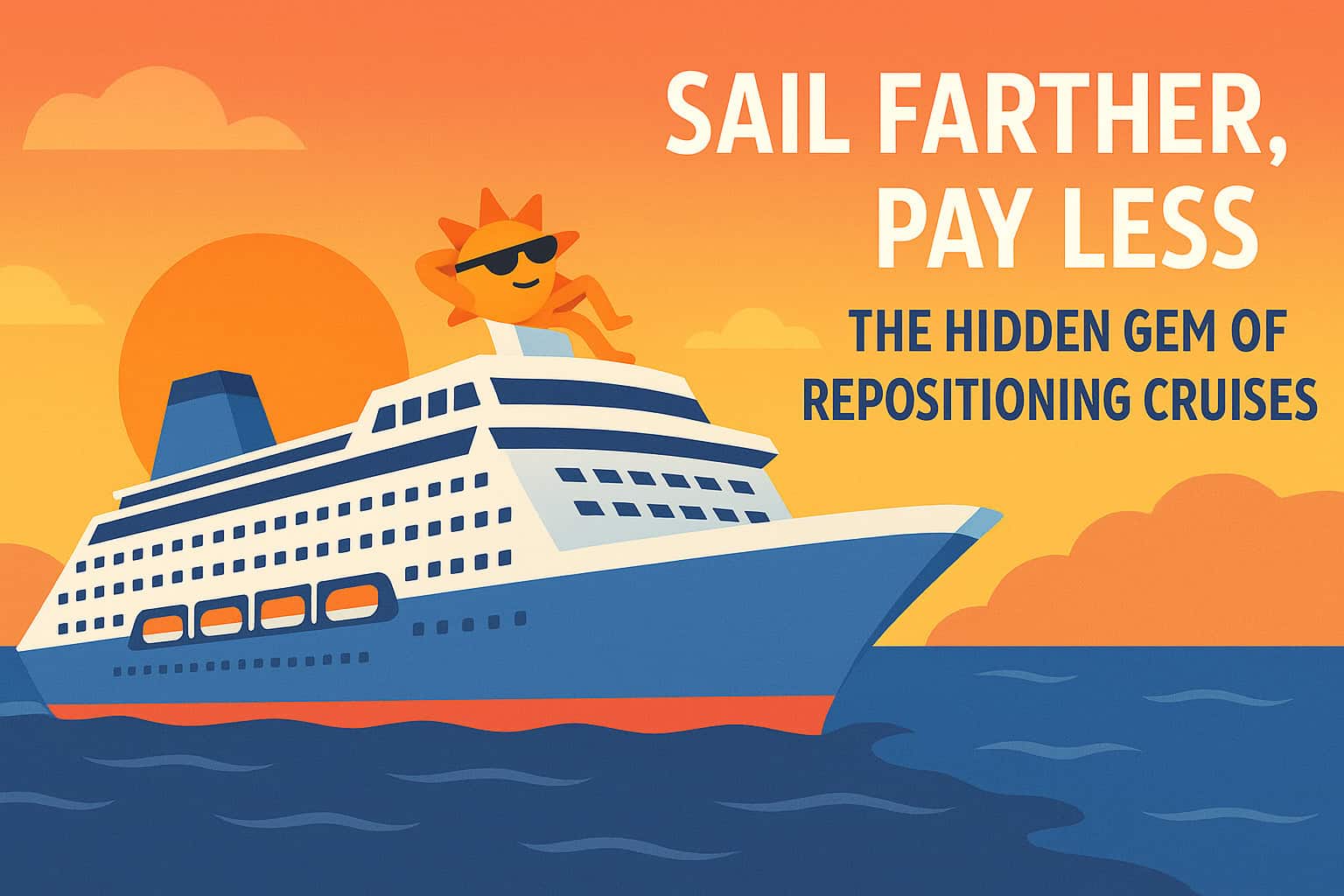
Sail Farther, Pay Less: The Hidden Gem of Repositioning Cruises

Why Repositioning Cruises Are the Best Deal at Sea
Every so often, cruise lines need to move their ships from one region to another — think Europe to the Caribbean, or Alaska to Mexico — to match the changing seasons. When that happens, they offer what’s known as a repositioning cruise: a longer voyage packed with sea days, fewer ports, and incredible value.
If you love the idea of lazy mornings on the balcony, afternoons by the pool, and evenings filled with fine dining, live music, and ocean sunsets, then a repositioning cruise might be your dream vacation. And the best part? The per-day cost is often half the price of a standard 7- or 10-day sailing — sometimes even less.
Note: Even with their incredible value, there are still a few hidden costs of cruising worth keeping in mind.
Turning “Fewer Ports” into a Perk
Yes, repositioning cruises visit fewer destinations—but let’s spin that ship around. Fewer ports mean fewer shore excursions, less money spent, and more time to actually enjoy the ship you paid for.
Think of it as a “floating resort” where every day is a sea day. Sleep in, hit the gym (or don’t), grab a drink at noon without guilt, and finally learn how to play trivia or ballroom dance. For ship lovers, repositioning cruises are the ultimate indulgence: more relaxation, less rush.
Besides, skipping a few $150 shore excursions might just pay for your next cruise.
When and Why Cruise Lines Reposition
Cruise lines reposition their fleets twice a year—in spring and fall—to chase the best weather and the busiest markets. This also gives them time to work on upgrading them — adding new dining, entertainment, and smart ship technology along the way.
- Spring Repositioning: Ships head from the Caribbean to Europe (for Mediterranean and Northern Europe seasons) or from California and Mexico to Alaska.
- Fall Repositioning: The ships make their way back to warmer waters, returning to the Caribbean, Panama Canal, or Mexico.
For passengers, these one-way routes create rare, unique itineraries — often crossing the Atlantic or Pacific. It’s a win-win: cruise lines avoid sailing empty ships, and travelers score multi-week adventures at unbeatable prices.
How Much Can You Save?
Here’s a quick snapshot to put things in perspective:
|
Cruise Type |
Average Length |
App. Cost per Night (pp) |
Ports of Call |
|
7-nt Caribbean |
7 days |
$175-$250 |
4-5 ports |
|
14-nt Mediterranean |
14 days |
$160-$220 |
7-9 ports |
|
14-21 nt Repo Cruise |
14-21 days |
$85-$125 |
3-5 ports |
That’s right — twice the cruise for half the cost. More days, fewer ports, and about a thousand more reasons to order dessert every night. You’ll often find that the comfort level on a repositioning cruise rivals some of the higher end premium or even luxury cruise lines — at a fraction of the cost.
Cruise Line Spotlights
Not all repositioning cruises are created equal. Here’s a quick look at what each major cruise line does best:
Royal Caribbean: Known for fun-packed ships and transatlantic routes with stops in the Azores or Canary Islands. Expect energetic sea days filled with activities—and fares often under $100 per day.
Celebrity Cruises: Ideal for travelers who love a more refined experience. Think wine tastings, chef-led cooking demos, and enrichment lectures while you glide between continents.
Norwegian Cruise Line (NCL): A great fit for those who crave flexibility—no fixed dining times and tons of entertainment. NCL often runs excellent solo traveler deals on repositioning cruises.
Princess Cruises: A favorite for longer repositioning routes, such as Asia to Alaska or Europe to South America. Loyal cruisers rave about Princess’ relaxed vibe and onboard enrichment programs.
Holland America: Perfect for guests who appreciate classic cruising and in-depth cultural experiences. Holland America’s repositioning itineraries often feature unique ports like Iceland or Greenland.
Who Repositioning Cruises Are Perfect For
These sailings aren’t for everyone—but for the right kind of traveler, they’re pure gold.
- The Ship Lover: You prefer the pool deck to the pier.
- The Retired Explorer: You finally have the time, and now you have the perfect cruise to fill it.
- The Remote Worker: Why Zoom from home when you can Zoom from mid-Atlantic?
- The Value Hunter: You get a thrill from telling friends, “Guess how cheap this cruise was?”
- The Slow Traveler: You savor the journey as much as the destination.
The Logistics: One-Way Doesn’t Mean One-Hassle
Because these cruises are one-way, you’ll need to arrange a one-way or open-jaw flight home. But don’t let that scare you—there are easy (and affordable) ways to plan it:
- Watch for airline one-way fare sales, use frequent flyer miles, or cash in credit card points to offset costs.
- Some cruise lines even offer “fly-cruise” packages, bundling airfare and transfers for convenience.
- Many travelers extend their trip to enjoy a few extra days in their embarkation or disembarkation city.
- If cruising from Rome to Miami, check out: Rome – A Favorite Port City
- If cruising from Amsterdam to the Caribbean, enjoy: Amsterdam – A Favorite Port City
When to Book for the Best Deals
The best repositioning deals tend to appear 6 to 8 months in advance, but flexible travelers can sometimes snag last-minute discounts. If you’re picky about cabin location, book early. If you’re adventurous and happy with “any ocean view,” waiting might save you hundreds.
For most sailings, booking directly with the cruise line or through a travel advisor who specializes in repositioning itineraries ensures you get the best perks—like onboard credit or drink package upgrades. Best Time to Cruise Guide
The Bottom Line
Repositioning cruises are the best travel value at sea—offering more days, more relaxation, and more ship life for a fraction of the cost.
If you’re a traveler who loves sea days, good food, and a bit of adventure, add one of these sailings to your bucket list. And next time you see an itinerary labeled “Repositioning” or “Repositioning – Panama Canal,” don’t scroll past it—you might just find your next great escape.