Panama Canal Cruise Tips for First-Timers

What We’re Learning Before Our Full Transit
Some cruises are about beaches, some are about food, and some are about finding the quietest corner of the ship and pretending your email inbox no longer exists.
A Panama Canal cruise feels different.
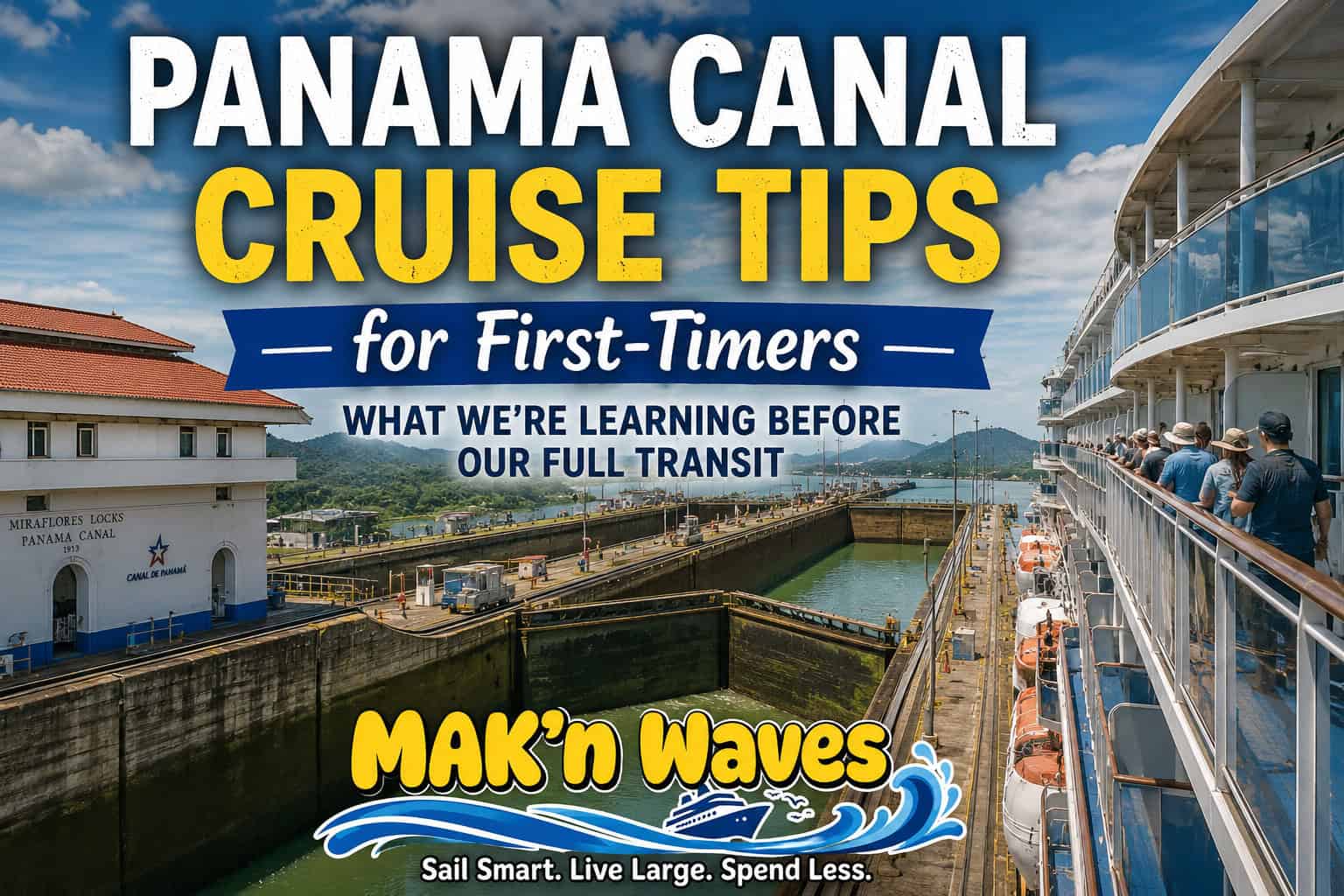
This summer, Susan and I are doing a 15-night Panama Canal crossing on Princess, sailing through the original locks on Coral Princess. We have not done this cruise yet, so this is not our “expert review” of the Panama Canal. That will come later, once we have actually stood on deck, watched the locks in action, and probably taken far too many photos of gates, mules, water levels.
But as we prepare for this sailing, we realized there is a lot to think through and many debates to be had, before booking a Panama Canal cruise. Full transit or partial transit? Old locks or new locks? Which side of the ship is best? Is a balcony worth it? What should you expect from the actual canal day?
So this article is written from the honest perspective of first-timers preparing for a Panama Canal cruise. We are learning as we go, making choices based on what matters to us, what research we have done, including discussions with others that have sailed the Canal, and hoping this helps other cruisers think through the same decisions.
Full Transit vs. Partial Transit
One of the first decisions is whether you want a full transit or a partial transit.
A full transit means your ship crosses from one ocean to the other. In most cases, that means sailing between Florida and the West Coast, often from Miami or Fort Lauderdale to Los Angeles or San Diego, or doing the reverse. This is the classic “we crossed the Panama Canal” experience.
For us, that was the draw. We figured if we were going to do the Panama Canal, we wanted to really do the Panama Canal. We wanted the ocean-to-ocean crossing, the longer itinerary, the sea days, and the feeling of seeing how this engineering marvel connects two completely different sides of the world.
That said, partial transits are popular for a reason. Many partial Panama Canal cruises sail round-trip from Florida, which can make flights easier, vacation time shorter, and logistics less complicated for sure. A partial transit may still take you through part of the canal experience, often including Gatun Lake and at least one set of locks, depending on the itinerary. For many cruisers, that may be plenty.
The best choice really depends on what you want from the trip. If your goal is to sample the Panama Canal while keeping the cruise more Caribbean-focused and easier logistically, a partial transit can make a lot of sense. If your goal is to experience the canal as the centerpiece of the cruise, a full transit is probably the one you should keep thinking about.
Why We Chose Coral Princess and the Original Locks
We chose Coral Princess for a few reasons.
First, Coral Princess is one of Princess Cruises’ smaller ships, which allows it to sail through the original Panama Canal locks. That mattered to us. The new locks seem quite impressive in their own right, but there is something about going through the historic locks that really appealed to us, like stepping into the story of the canal itself.
The original locks are narrower, older, and more intimate. Ships pass much closer to the walls, and from what we have read and watched, the scale of the process feels more dramatic because you are closer to the mechanics of it all. The new locks, opened in 2016, were built for much larger ships and represent the modern evolution of the canal. That would be fascinating too, especially for people who love massive ships and modern engineering.
But for our first Panama Canal cruise, we wanted the historic experience.
The second reason is Princess itself. Earlier this year, we cruised with Princess in Southeast Asia on Diamond Princess, and there were so many things that sold us on coming back. We liked the calmer onboard feel, the MedallionClass convenience, the food, the service, and the way Princess seems to fit the kind of cruising we’re enjoying at this stage of life.
We are not looking for water slides, go-karts, and a floating amusement park. For a Panama Canal itinerary, we wanted a ship that felt comfortable, classic, and easy to settle into for 15 nights. Coral Princess seemed like the right fit.
Old Locks vs. New Locks: Is One Better?
This is one of those questions where “better” depends on what kind of traveler you are.
The original locks are the historic Panama Canal experience. They opened in 1914 and were designed for ships that fit the older Panamax dimensions. For cruise passengers, the appeal is that the ship feels very close to the lock walls. You can see the gates, the equipment, the water level changes, and the tight choreography of moving a ship through the canal.
The new locks, often referred to as the expanded or Neopanamax locks, opened in 2016. They allow much larger ships to transit the canal, which has changed what types of vessels can use the route. If you are on a larger ship, you may go through the new locks, and that comes with its own impressive sense of scale.
For us, the old locks won because we wanted the more historic, close-up version of the experience. But I would not dismiss the new locks, as that will be our choice the next time through the Canal. If anything, the two experiences tell different chapters of the same story. The old locks show what made the Panama Canal one of the great engineering accomplishments of the 20th century, while the new locks show how the canal continues to evolve for modern shipping and modern cruising.
Which Side of the Ship Is Best for a Panama Canal Cruise?
This may be the most common question people ask, and the answer is not as simple as “port” or “starboard.”
First, it depends on whether you are sailing eastbound or westbound. A westbound full transit from Florida to the West Coast is different from an eastbound cruise heading from the Pacific back toward Florida. Sun exposure, approach views, and scenery can all change based on direction.
Second, canal day is not really a “sit on your balcony and never move” kind of day. At least, that is not how we are approaching it. We expect to move around the ship throughout the day so we can see the canal from different perspectives. The bow, promenade deck, open decks, aft areas, and side railings may all give different views.
A balcony can still be wonderful, especially for quiet moments when we want a break from the crowds. But if you stay only on your balcony, you may miss part of the experience. The canal is not one static view, as it’s a slow-moving, all-day process, and part of the fun seems to be watching it from different angles.
Our current thinking is that the “best side” of the ship matters more for the overall itinerary than for the actual canal transit. During the canal day itself, the best strategy may be to wander.
Is a Balcony Worth It on a Panama Canal Cruise?
We are balcony people, so this one was not much of a debate for us.
On some itineraries, a balcony is nice but not essential, but on a Panama Canal cruise, it feels more valuable. The transit day will be long, probably hot, and definitely crowded in public viewing areas, so the balcony will provide us moments where we may want to step outside without turning it into an expedition.
That does not mean you need a balcony to enjoy the Panama Canal. Plenty of people have amazing experiences from the open decks. But if the canal is the main reason you are booking the cruise, and the budget allows, a balcony seems like one of those upgrades that could genuinely improve the experience.
For us, the balcony is less about getting the “perfect” view and more about having a quiet home base. We can start the morning outside with coffee and tea, watch parts of the transit from our cabin, then head out to the public decks when we want the bigger panoramic view.
Be Ready for a Long, Hot, Slow, Fascinating Day
One thing we are reminding ourselves is that the Panama Canal transit is not a thrill ride.
This is not like pulling into a beautiful Mexican or Caribbean port where the excitement happens all at once. The canal transit is slow, mechanical, historical, and fascinating. Ships do not zip through the locks, though move carefully. Water levels rise and fall, gates open and close, and the whole process takes time.
That is part of the appeal.
But it also means you should prepare for the day differently. We are planning for heat, humidity, sun, and a lot of time outside. That means sunscreen, hats, lightweight clothing, water, and realistic expectations. We want to enjoy the day without becoming those people who are sunburned, overheated, cranky, and suddenly convinced the buffet or another mojito is the only thing that can save them.
This is also a good day to pace yourself. You do not have to stand in one spot for eight hours. Move around, take breaks, listen to the narration, grab food, come back outside, and let the day unfold.
Pay Attention to the Onboard Narration
One of the things we are looking forward to is the live narration during the canal transit. It’s our understanding that the vast majority of ships through the Canal provide onboard narration.
This is the kind of cruise day where context matters. Without narration, you may still enjoy the views, but you might not fully understand what you are seeing. With narration, the canal becomes more than a series of gates and water chambers. You start to understand the history, the engineering, the geography, and the sheer complexity of moving ships between oceans, at least that’s our hopes. For curious travelers, this may be one of the best parts of the entire cruise.
We are hoping Princess does this well, especially because our previous Princess experience gave us the sense that they understand destination-focused cruising. A Panama Canal transit is not just another scenic sailing day, but the reason many people book the cruise.
Think Carefully About Excursions
Panama Canal cruises often include a mix of beach ports, cultural stops, Central American ports, Mexican ports, and sometimes Colombia or other destinations depending on the route. The canal may be the headline, but the ports can help shape the overall experience.
Our approach is to avoid overbooking ourselves. On a 15-night cruise, especially one with several sea days and a major transit day, we do not feel the need to turn every port into a marathon. Some ports may call for a guided excursion, where others may be better as relaxed wander days.
The biggest advice we would give before even taking this cruise is to understand the purpose of your trip. If the Panama Canal is the main event, save your energy for it. Do not exhaust yourself the day before trying to win some imaginary shore excursion endurance contest.
We have certainly learned this lesson on other cruises. Sometimes the best trip is not the one where you do the most, but the one where you remember the most.
As we’ve cruised more, we’ve become less focused on checking every box and more focused on enjoying the experience. That’s one reason we’ve become more comfortable occasionally skipping a port when it doesn’t genuinely interest us. If that idea sounds strange, you might enjoy our article on Skipping Ports: When Staying Onboard Makes Sense, where we discuss why sometimes the best excursion is simply enjoying an uncrowded ship and a slower day at sea.
What to Pack for a Panama Canal Cruise
A Panama Canal cruise can include a variety of climates and port experiences, but for the canal day itself, we are thinking practical.
We will want lightweight clothing, comfortable shoes, sunscreen, sunglasses, a hat, and a refillable water bottle (assuming you don’t have a pre-purchased drink package that includes waters.) A good camera or smart phone with plenty of storage is a must because this seems like the kind of day where you take 400 photos and later realize 372 of them are basically the same lock gate from slightly different angles.
Binoculars may also be worth bringing. We are looking forward to seeing details along the canal, other ships, wildlife, or activity on shore, so binoculars on in the bag. A small day bag could also be helpful so you can move around the ship without constantly returning to your cabin….also done that too many times in the past.
And because this is still a cruise, we will also pack for dinners, sea days, port days, and the normal rhythm of ship life. The canal is the big event, but it is still one day within a longer cruise.
Why This Cruise Feels Different
The more we prepare, the more we realize this cruise feels different from many others.
A Panama Canal cruise for us isn’t just about where we stop, but it’s about the crossing itself. It is about watching something that changed world trade, travel, and geography in real time. It is about seeing a place where human ambition, engineering, nature, history, and modern commerce all meet in one narrow stretch of water. I know that may sound dramatic, but this is one of those itineraries where the drama is built in.
We are excited because this cruise seems to match the kind of travelers we have become. We still love good food, relaxing sea days, and exciting ports, but we also love cruises that teach us something, make us curious, and give us time to process what we are seeing.
That is why the Panama Canal has been on our bucket list for far too long.
Our Best First-Timer Advice Before We Go
Since we have not sailed it yet, we are not going to pretend we have all the answers. But based on our planning, here is the advice we would give other first-timers:
Choose a full transit if crossing the canal is the main reason you are booking the cruise. Choose a partial transit if you want a shorter, easier, often round-trip option that still gives you a taste of the canal.
Decide whether the old locks or new locks matter to you. If you want the historic, close-up canal experience, look for a smaller ship that uses the original locks. If you are on a larger ship, the new locks still offer an impressive modern engineering experience.
Do not obsess too much over port vs. starboard. Your sailing direction matters, but on transit day, plan to move around the ship.
Consider a balcony if the canal is the highlight of your trip. It gives you a quiet place to watch, rest, and recharge.
Prepare for heat, sun, and a slow-moving day. This is not a quick scenic sail-by. It is an all-day experience.
Most importantly, go in curious. The Panama Canal is not just another cruise destination, as it’s one of the rare cruise experiences where the ship itself becomes part of the story.
Final Thoughts
We will report back after our cruise with what we got right, what we got wrong, and what surprised us most.
For now, we are excited about the choice we made: a 15-night full transit on Coral Princess through the original locks. It feels like the right ship, the right itinerary, and the right kind of cruise for travelers who enjoy sea days, history, engineering, and the slower rhythm of watching the world move one lock at a time.
And yes, I am fully prepared to remind Susan that not every lock gate needs its own photo. But let’s be honest, in her mind, it probably does.