The Cruise Door Decoration Debate Is Getting Heated

Why the Cruise Door Decoration Debate is Growing
The cruise door decoration debate is suddenly getting surprisingly heated.
For years, decorating your cruise cabin door has been one of those quirky little cruise traditions that many passengers absolutely love.
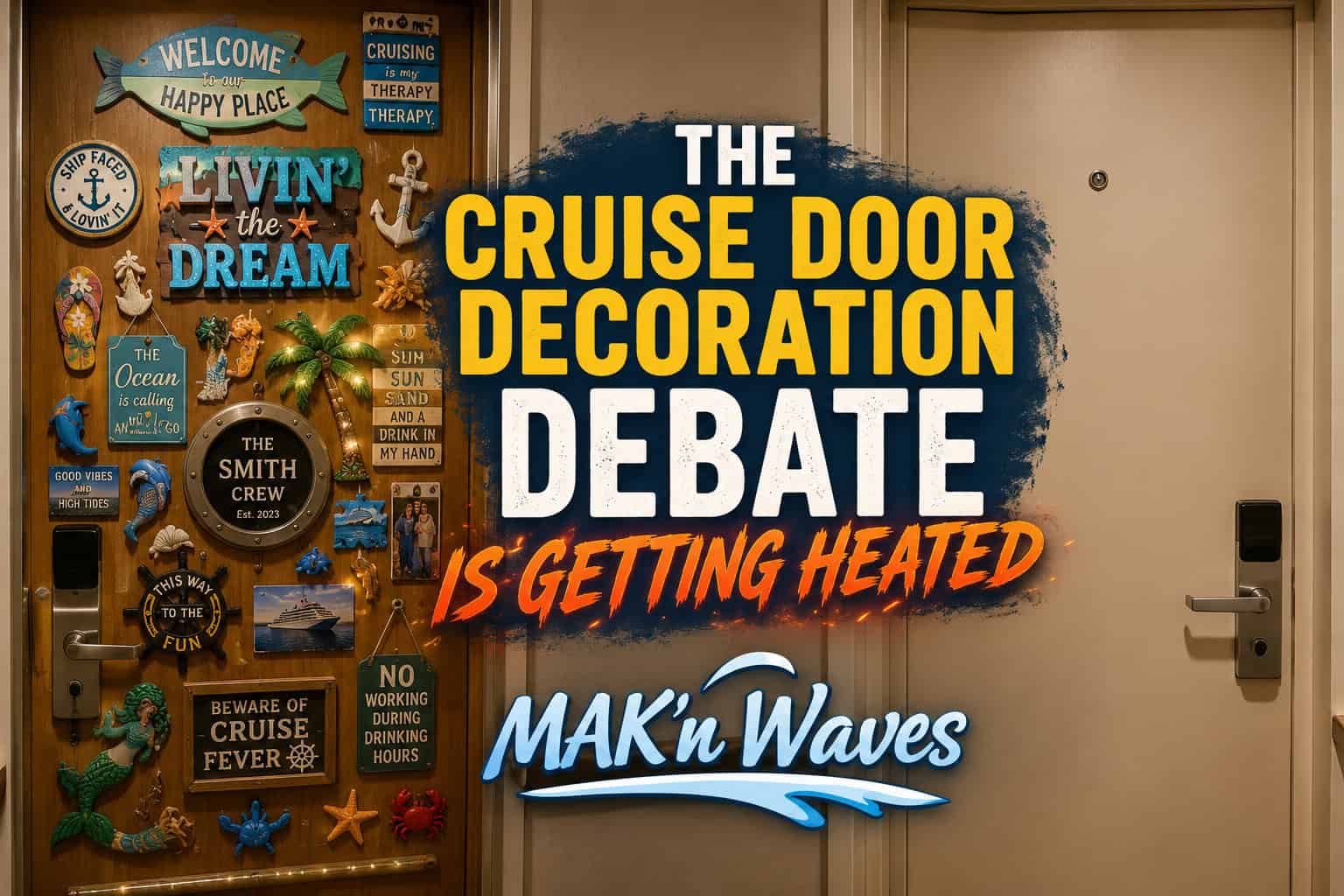
Birthday banners. Magnetic flamingos. Anniversary signs. Whiteboards for messages. Holiday themes. Family reunion decorations. Entire doors transformed into mini art projects.
Walk down almost any cruise ship hallway these days and you will quickly realize some cruisers take cabin door decorating very seriously.
But suddenly, the conversation around cabin door decorations is getting surprisingly heated.
Over the past week, news and social media discussions have exploded after reports surfaced that Royal Caribbean is tightening enforcement regarding certain types of cabin door decorations, citing safety concerns and hallway obstruction issues. While versions of these policies have existed before, many cruisers feel the enforcement now appears more visible and more aggressive than in the past.
And as often happens in the cruise world, what seems like a small policy tweak has quickly turned into a much larger debate about cruise culture itself.
Why Cabin Door Decorations Became So Popular
Part of the appeal is simple: cruise ships can feel surprisingly similar floor-to-floor and hallway-to-hallway.
Decorating your cabin door helps people quickly find their room, especially after a long day in port… or perhaps after a few drinks by the pool deck.
But for many cruisers, it goes far beyond convenience. Door decorating has evolved into its own cruise subculture. Families coordinate themes. Friend groups create matching magnets. Cruise Facebook groups regularly exchange decoration ideas months before sailing.
For some passengers, it has become part of the cruise experience itself.
Susan and I typically don’t decorate our cabin door when cruising alone, but interestingly, that personal policy changes pretty quickly when we cruise with other couples or a small group. Suddenly it was important to us to have a recognizable cabin door for leaving quick notes, coordinating plans, or simply helping everyone find the right cabin after a long evening onboard.
As it has been a couple of years since traveling with a family group (anyone feeling the guilt I am laying on?), cruise technology has changed dramatically over that time, which may convince us to abandon using morse code, smoke signals or the cabin door as the best means of communication to others in our group.
With the advancement of cruise line mobile apps and internal messaging systems, leaving messages for fellow travelers has become easier than ever. In many ways, cruise lines may now view some traditional hallway communication methods as unnecessary in today’s connected onboard environment.
That shift actually ties directly into another trend we explored in our post on Smart Ships and Future Cruise Tech, where onboard technology is rapidly transforming how passengers navigate, communicate, and experience life at sea.
So Why Are Cruise Lines Suddenly Cracking Down?
This is where the debate gets interesting.
Cruise lines, including Royal Caribbean, point to several concerns:
- Fire safety
- Hallway obstruction
- Damage to doors and walls
- Decorations falling into corridors during rough seas
- Adhesive materials damaging surfaces
- Difficulty for crew accessing cabins during emergencies
On paper, most of these explanations sound reasonable.
After all, modern cruise ships are essentially floating cities carrying thousands of passengers. Cruise lines constantly evaluate anything that could impact safety, evacuation procedures, or operational efficiency.
But many cruisers are skeptical that safety is the only reason.
Some passengers feel cruise lines are increasingly trying to control and standardize the onboard environment, reducing anything that creates clutter, congestion, or operational headaches.
Others believe cruise lines are simply reacting to a small number of passengers who take decorating too far.
And honestly, this debate feels like part of a broader cruise etiquette conversation happening everywhere right now. The bigger ships get, the more passengers seem to notice the little things that affect shared spaces onboard. Cabin door clutter today… buffet line cutters tomorrow. We recently dove into some of the cruise habits passengers wish would disappear forever in our post, Cruise Etiquette: The Things Passengers Wish People Would Stop Doing.
The Cruise Industry Is Quietly Tightening Rules Everywhere
What makes this story more interesting is that it may reflect a broader shift happening across the cruise industry.
Over the past few years, cruise lines have become noticeably stricter about a variety of onboard policies:
- Bluetooth speakers at pools
- Chair hogging enforcement
- Smoking and vaping areas
- Hallway scooter parking
- Drink package abuse
- Balcony behavior
- Power strip restrictions
None of these policies individually seem dramatic.
But collectively, they point toward cruise lines trying to better manage ships that now regularly carry 5,000 to 8,000 passengers at a time, including staff of course.
The larger ships become, the more cruise lines rely on consistency, efficiency, crowd management, and safety protocols.
At the same time, many cruisers increasingly view cruises as highly personalized vacations where they want freedom to customize their experience. That tension is becoming more visible onboard. And oddly enough, cabin door magnets may simply be the latest battleground in that bigger conversation.
Cruisers Are Divided
What makes this topic fascinating is how emotionally invested people become over something that seems so minor.
Some cruisers argue: “It’s harmless fun. Let people enjoy themselves.”
Others counter: “Hallways already feel crowded enough. We don’t need decorations everywhere.”
Then there are plenty of cruisers somewhere in the middle: “Basic magnets and signs are fine… but some people clearly go overboard.”
Social media has only amplified the debate. Cruise Facebook groups have been flooded with discussions ranging from safety concerns to complaints about cruise lines becoming too restrictive.
And perhaps that is why this story suddenly gained traction. It is not really about magnets or birthday banners, but it’s about how cruising culture continues to evolve.
Final Thoughts
Will cabin door decorations disappear completely? Probably not.
In fact, many cruise lines still allow certain types of magnetic decorations while restricting adhesives, oversized displays, or anything considered unsafe.
But this debate does highlight something larger happening across the industry. Cruise ships are becoming more technologically advanced, more operationally complex, and more tightly managed than ever before. At the same time, passengers increasingly want cruises to feel personal, social, and customizable.
Somewhere between those two realities is where this entire cabin door decoration debate now lives, and based on the reactions online, cruisers clearly have strong opinions about which side should win.