Why Are Cruise Travelers Suddenly So Frustrated with Gratuities?

A look at why cruise gratuities have become such a hot-button issue…and why I think the real story has very little to do with another dollar or two per day.
Just a few years ago, tipping felt pretty straightforward. You sat down at a restaurant, enjoyed a good meal, and rewarded good service with a gratuity that reflected your experience. Most of us never gave it much thought because it was simply part of dining out.
Today, however, it feels like tipping has become part of almost every purchase we make. Whether you’re grabbing a cup of coffee, picking up takeout, or stopping by a frozen yogurt shop, the experience often ends the same way. The cashier smiles, turns the payment terminal toward you, and says, “It’s just going to ask you a couple of questions.” Of course, we all know what those “questions” are. Somewhere between the suggested 20%, 25%, and 30% buttons, many of us have found ourselves wondering, “When did tipping become part of everything?”
That growing frustration didn’t begin with cruising, but it certainly followed us onboard.
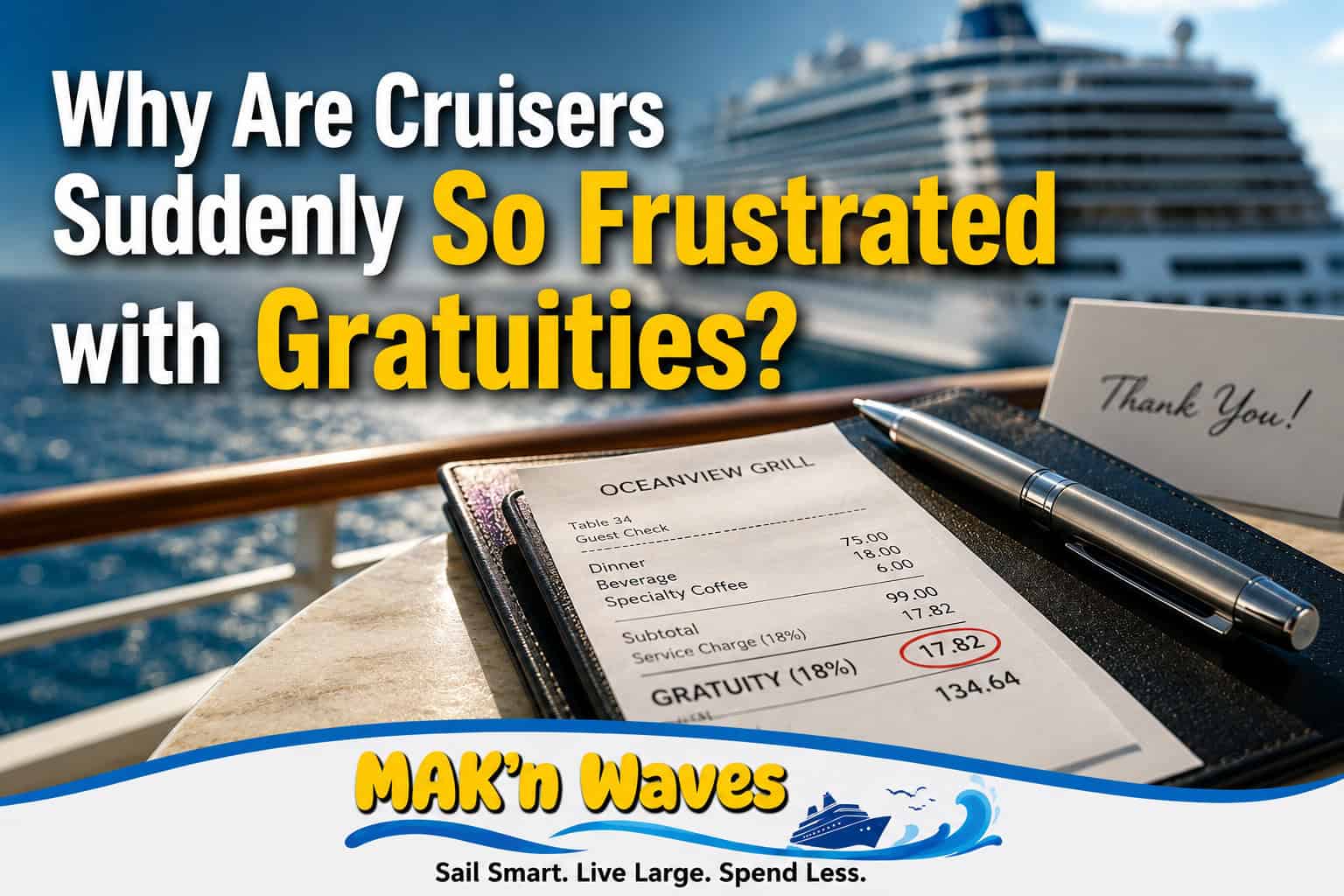
When Celebrity Cruises announced another increase to its automatic daily gratuities last week, social media responded exactly the way you’d expect. Similar increases from Carnival, Princess, and Holland America over the past year have produced much the same reaction, with comments ranging from “Here we go again” to “Another money grab.” Reading through many of those discussions, though, I couldn’t help thinking that people weren’t really reacting to another $1.50 per day, but were reacting to something that’s been quietly building ever since the pandemic.
It’s Not Really About Cruise Gratuities
I don’t believe cruise travelers suddenly woke up one morning angry about gratuities. If anything, I think they’re simply tired of feeling like every purchase now comes with another fee, another surcharge, or another prompt asking them to spend just a little more than the advertised price.
Ironically, cruise lines are actually more transparent than many businesses we deal with every day. Automatic gratuities are disclosed before you sail, and most cruise lines even allow you to prepay them months in advance. That’s a far cry from standing at a checkout counter trying to decide whether someone who handed you a muffin deserves a 25% tip.
So why does another cruise gratuity increase still frustrate so many travelers?
Because cruise gratuities have become part of a much larger story. After years of being asked to tip nearly everywhere we go, many people no longer view gratuities as a way to reward great service. Instead, they see another mandatory charge attached to an already expensive vacation. Whether that’s entirely fair or not almost doesn’t matter, because perception is reality.
Why Another $1.50 Feels Bigger Than It Is
Reading through the comments after Celebrity’s announcement, I noticed something interesting. Very few people were actually talking about the extra $1.50 itself. If you asked most cruisers whether another dollar or two per day would cause them to cancel a vacation they’ve been looking forward to for months, I suspect most would say, “Of course not.”
So why does it generate such a strong reaction?
I think it’s because we rarely evaluate vacation costs one charge at a time. We evaluate them emotionally.
One of the things I love most about cruising is that the vacation doesn’t begin when you step onboard, but it begins the day you book it. From that moment forward, we’re researching the ports of call, watching online videos, reading cruise forums, shopping for cruise clothes, and counting down the days until embarkation. The anticipation becomes part of the vacation itself.
That’s why another announcement about increased gratuities, however small, feels bigger than the actual amount. It’s not just another $1.50. It’s another reminder that vacations seem to cost a little more every year.
In other words, I don’t think travelers are reacting to the increase itself, but are reacting to everything that increase represents.
Personally, my frustration isn’t with paying mandatory gratuities. Susan and I prepay ours on every cruise, and I’ve long considered them part of the overall vacation cost. If the cruise line requires them, I’ve already mentally included them in the price of the trip.
In fact, that’s one of the themes you’ll find throughout MAK’n Waves. I’ve always encouraged readers to focus on the total vacation cost, not just the advertised cruise fare. Airfare, gratuities, shore excursions, hotels, travel insurance, drink packages, and Wi-Fi all contribute to what you’ll actually spend. (If you haven’t read it yet, my article Hidden Costs of Cruising takes a much deeper look at many of the expenses that surprise both first-time and experienced cruise travelers alike.)
That’s why I’d actually prefer to see cruise lines take a different approach…
If gratuities are mandatory, simply include them in the advertised cruise fare. This is how it is done in many other countries, like Australia for example, where their cruise price includes any kind of gratuity. I’d much rather compare two cruises knowing I’m looking at the full cost of each vacation than mentally adding another required charge to every booking. It wouldn’t change what I ultimately pay, but it would make comparing cruise lines simpler, more transparent, and probably a little less frustrating.
Ironically, I suspect many travelers would react very differently if they never saw a separate gratuity line at all. The total vacation cost would be exactly the same, but psychologically it would feel like one purchase instead of a series of additional charges.
And when it comes to planning a vacation, perception often matters just as much as the math.
The Way Susan and I Handle It
Over the years, Susan and I have developed a payment strategy that works surprisingly well for us. It probably doesn’t save us a penny, in fact I know it doesn’t, but it certainly makes paying for a cruise feel a little less painful.
When we first book a cruise, we simply pay the required deposit. That’s usually where we stop. We don’t immediately prepay gratuities, purchase drink packages, buy Wi-Fi, or reserve shore excursions. Instead, we intentionally spread those purchases out over the six months leading up to the cruise.
About six months before sailing, I’ll usually finalize our airfare. When final payment for the cruise comes due, typically 120-150 days before departure, we pay only the cruise fare itself. A month or so later we’ll reserve any ship-sponsored shore excursions we’re planning to take, followed by prepaid gratuities about sixty days before we sail. If we’ve decided to purchase a drink package or Wi-Fi, that usually happens during the final month before embarkation.
By the time we walk up the gangway, almost everything has already been paid.
Has the total cost of our vacation changed? Not one penny.
Have I somehow outsmarted the cruise lines? Absolutely not.
But psychologically, it feels completely different.
Instead of one enormous credit card bill, we’ve spread our vacation expenses across several months and several billing cycles. By embarkation day it honestly feels like the vacation has already been paid for, even though I know the math hasn’t changed at all. Vacations are emotional purchases, not mathematical ones, and if this little mental trick makes the experience more enjoyable before we even leave home, I’m perfectly happy to keep doing it that way.
Susan Has Her Own Theory
As it turns out, Susan likes our payment strategy even more than I do, but for a completely different reason.
Somewhere around the second or third day of every cruise she’ll casually look at me and say, “You know…we’re really not going to have much of a bill when this cruise is over.”
After nearly forty years of marriage, I’ve learned that this isn’t simply an observation. It’s a carefully crafted piece of financial logic that’s surprisingly difficult to argue with.
Suddenly the gift shops start looking less like stores and more like opportunities. “After all,” she’ll remind me, “that’s the only thing that’s going to be on the bill.”
The funny thing is…She’s not entirely wrong.
The total cost of the vacation hasn’t changed one bit, but because most of it is already behind us, those remaining purchases somehow feel much smaller. Once again, psychology wins. We haven’t spent less money but we’ve simply experienced spending it differently.
Don’t Forget Who These Gratuities Support
One thing I think is worth remembering is that the people serving your meals, cleaning your cabin, and working behind the scenes didn’t decide how cruise lines structure their pricing.
Over the years, Susan and I have met some incredible crew members whose kindness, professionalism, and genuine care became part of the memories we brought home. Those automatic gratuities help support many of the people who work incredibly hard to create the vacation experience we enjoy.
If you’re interested in learning more about how cruise gratuities are distributed and which crew members actually benefit, I covered that in much more detail in Cruise Gratuities Explained: Where Your Mandatory Tips Really Go.
Final Thoughts
I don’t think cruise travelers are suddenly frustrated because Celebrity, Royal, or any other line suddenly raised gratuities by another dollar or two per day.
I think they’re frustrated because that announcement came after several years of being asked to tip almost everywhere else. Coffee shops, food trucks, takeout counters, self-service kiosks, and payment terminals have gradually changed the way many of us feel about gratuities. Cruise lines simply became part of a much bigger conversation.
As for Susan and me, we’ll continue prepaying our gratuities about sixty days before every cruise. It won’t save us a single dollar, but it does allow us to board the ship feeling like our vacation has already been paid for. And if that also gives Susan one more reason to convince me that Princess sweatshirt or Celebrity bracelet and charm is “about all that will be on the bill,” well…I’ve learned there are far worse ways to end a vacation.